MYB Music & StoriesPress contact ↗

A press introduction · Mourad Youssef Bouajaja

Two songs.
One road home.

What if the elders left the village to meet the young in the city?

That reversal sits at the heart of Darb El Ghubar and its story, Leaving the Village. Mourad Youssef Bouajaja is a Tunisian-born songwriter, producer and instrumentalist based in Pennsylvania, in the United States. His journey spans ensemble performances across Tunisia in North Africa, a return to the stage and further studies in America, and music-making in his home studio today. MYB Music & Stories brings his recordings and writing together.

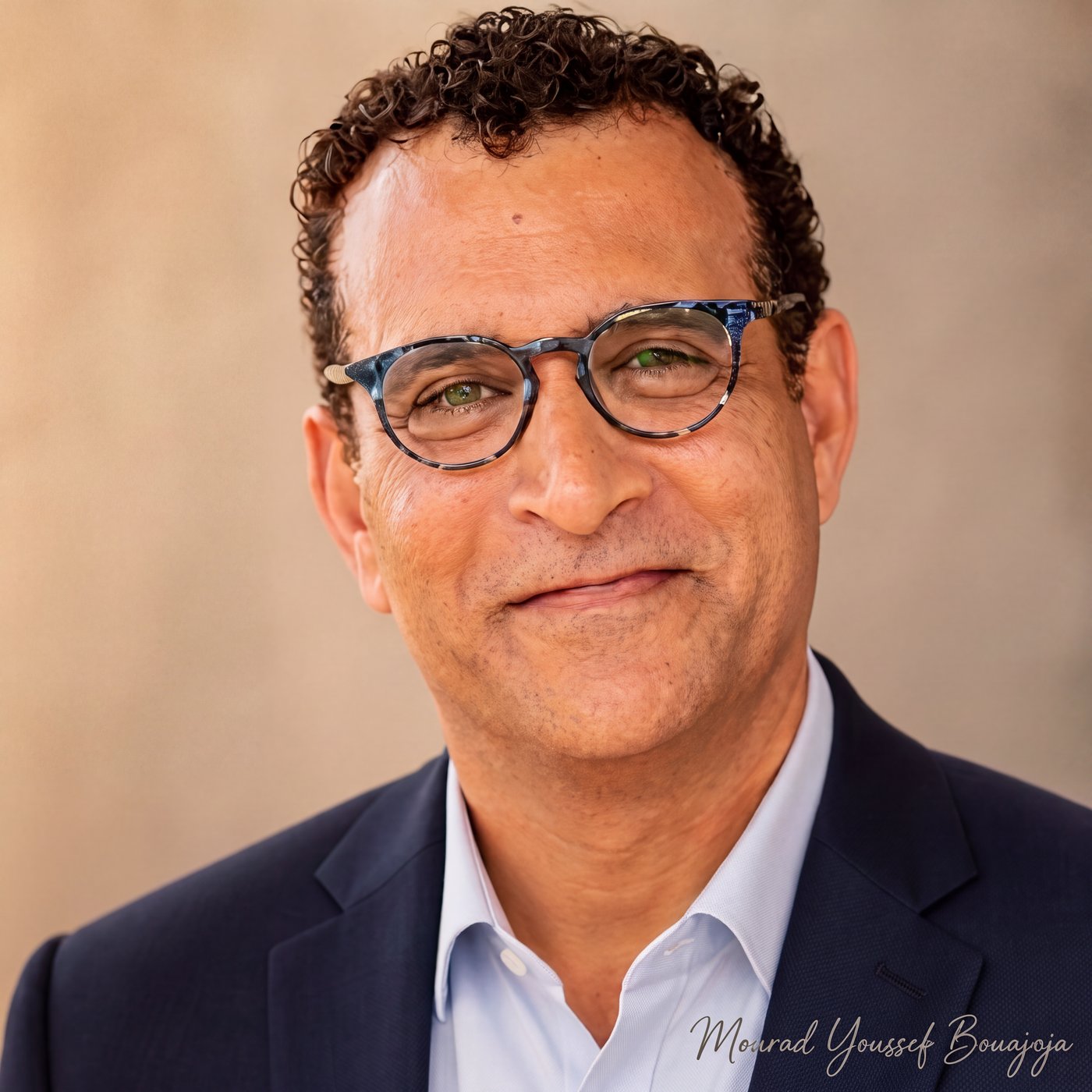
Portrait of Mourad Youssef Bouajaja
Mourad Youssef Bouajaja

At a glance

Artist
Tunisian-born songwriter, producer and instrumentalist
Based in
Pennsylvania, United States
MYB Music & Stories
His independent home for recordings, films and writing
This introduction
Two songs and a film about belonging, alongside the story behind them

Artist background & press kit ↗ · Open portrait ↗

Two complete recordings, a film excerpt and the full essay. No account or subscription required. Bittersweet is freely available here as a press selection.

Start here

Two sides of one musical world.

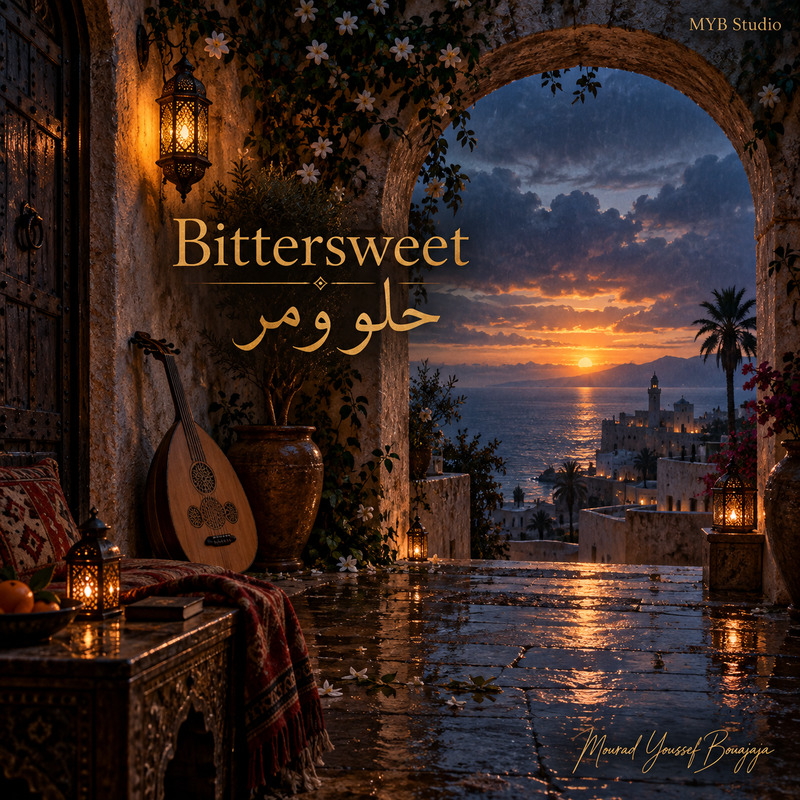
Bittersweet cover artwork

01 · Instrumental

Bittersweet

حلو ومر

A journey through life’s good days and bad: an expressive synthesizer solo opens into a steady Arabic dance rhythm, with musical phrases answering one another, before the music slows into acceptance and peace. An introduction to the emotional world of MYB, without words.

Open Bittersweet audio directly ↗

Recording credits

Original melody and instrumental foundation by Mourad Youssef Bouajaja.

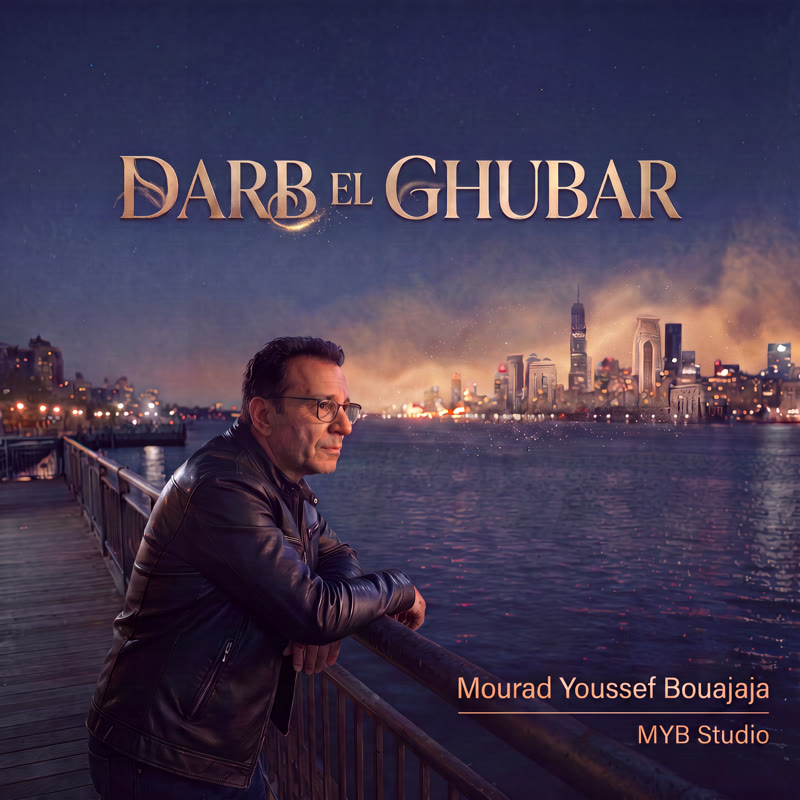
Darb El Ghubar cover artwork

02 · Raï-Phonk

Darb El Ghubar

درب الغبار

The road of dust. The gasba, a North African flute, meets deep electronic bass in a song of endurance and belonging. Here, Raï-Phonk brings together Algerian raï music and the bass-heavy sound of phonk, a hip-hop style. Its accompanying film imagines elders carrying their instruments into the city to meet a younger generation halfway—the story behind the essay below.

Open Darb El Ghubar audio directly ↗

Recording credits

Lyrics, original melody and instrumental foundation by Mourad Youssef Bouajaja.

Musical roots · Tunisia

From music school to stages across Tunisia.

Born in Sfax, a city in Tunisia, Mourad moved with his family to Tunis, the country’s capital, at five and later lived in its suburbs.

He began learning music at school and continued his studies at the Conservatory of Tunis, in Tunisia’s capital. He later founded Noujoum Ellil, a Tunisian band that began as a small project at a Dar Chabab—a community youth centre, similar to a YMCA.

The group quickly grew into a full takht, a traditional Arabic music ensemble, and travelled throughout Tunisia. They performed at celebrations, weddings and smaller festivals, including the Bou Makhlouf Festival in El Kef, a city in western Tunisia near the Algerian border.

His main instruments were the oud, a traditional Arabic lute, and a Yamaha PSR-64 keyboard with quarter-tone tuning, allowing pitches between the notes available on a standard piano keyboard. On the keyboard, he also played sounds resembling the qanun, an Arabic plucked zither, and the kawala, an Egyptian flute, alongside other traditional instrumental sounds.

At 26, he immigrated to the United States, bringing this chapter with Noujoum Ellil to a close.

Performance & education · United States

A new musical chapter in the United States.

During his first years in the United States, Mourad stepped away from playing music. That changed in the late 1990s, when he met Mohamed Salah Harkati, a Tunisian composer and violinist whom he knew as a prominent musician back home. Harkati was living in Michigan and invited him to move to Dearborn, near Detroit, to join his band as a percussionist.

Mourad accepted. They performed at the Omar Khayam nightclub, then at two clubs in Chicago, as well as weddings and New Year’s Eve celebrations. Their musical partnership eventually concluded after a wedding performance in San Diego, California. Mourad returned to Chicago and decided to pursue higher education.

In Champaign, Illinois, he began studying music at Parkland College, taking music theory and piano classes. He then joined the Balkanalia Ensemble at the University of Illinois, led by Dr. Donna Buchanan. The ensemble’s repertoire focused on Bulgarian, Macedonian, Greek and Turkish music. He played mainly percussion and took part in the ensemble’s annual performance. At the University of Illinois, he also took graduate-level courses in ethnomusicology: the study of music in its cultural and social contexts.

He later moved to Bloomington, Illinois, to pursue a degree in sociology, graduating in 2006. These years brought together performance, musical study and an interest in the social contexts of music.

The creative process today

Inside the home studio.

Today, in his Pennsylvania home studio, Mourad combines oud, darbuka—a goblet-shaped hand drum—and riq, an Arabic tambourine, with a software-based production setup.

I compose and record the foundation of every song myself — melody, voice, darbuka — then use modern tools, including Suno, to develop the arrangement. On my vocal songs, you hear an AI model of my own voice.

I develop the music in Cubase and use DaVinci Resolve to edit and finish the accompanying videos.

Darb El Ghubar · Film excerpt

From the road of dust to the neon street.

A 75-second passage from the film discussed in Leaving the Village, showing its desert procession and city scenes. This excerpt begins at 1:30 in the full film and ends at 2:45.

Visual credits: Mourad’s personal portrait photography and AI-generated imagery created by him with Grok.

Open the film excerpt directly ↗ · No sign-up required. The complete film remains in the members’ video catalog.

The story behind the music · Full essay

Leaving the Village

What Darb El Ghubar is actually about

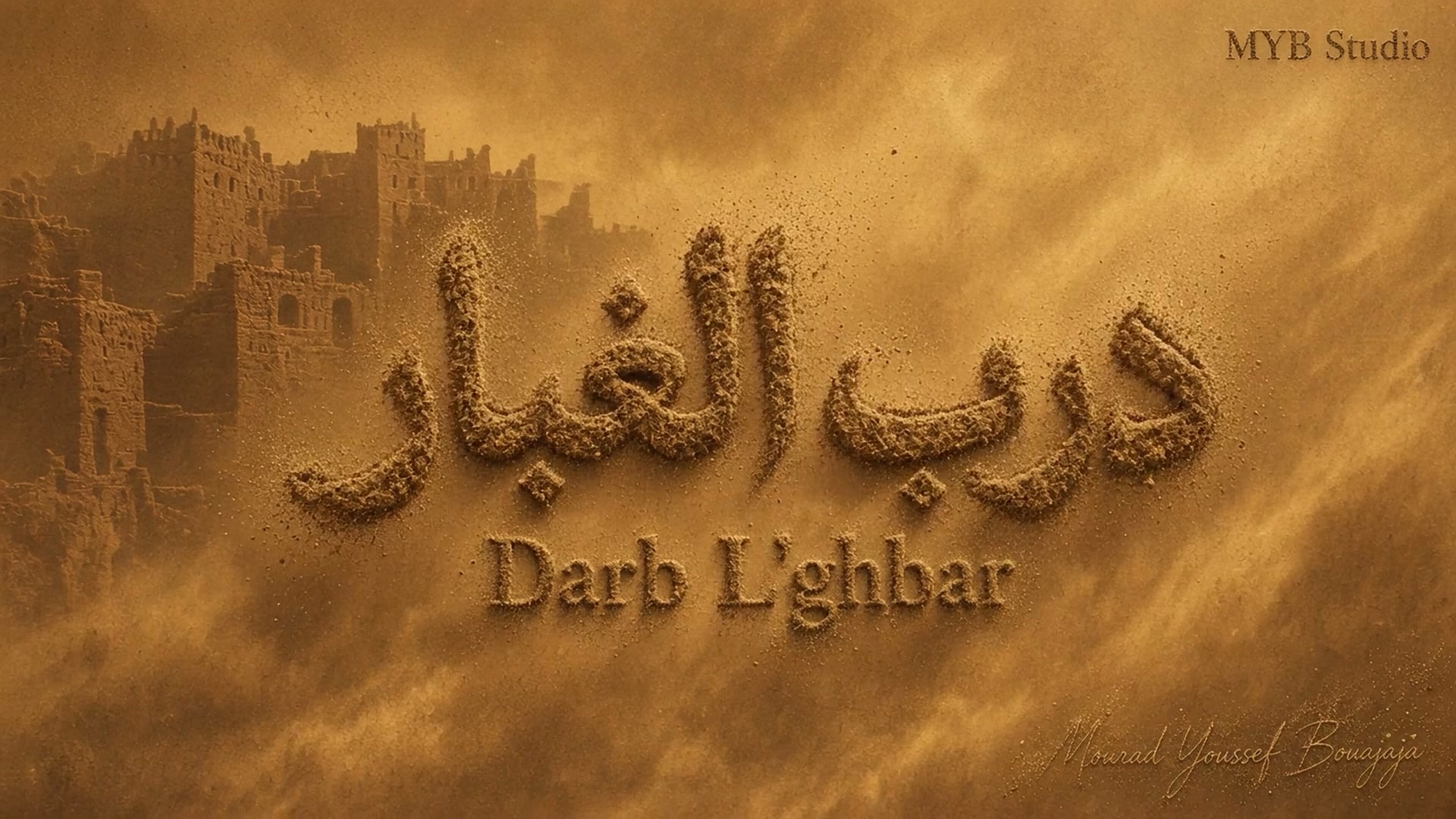
Darb El Ghubar title carved into a desert wall, from the official video

Every story about music and migration is told the same way: the young leave the village, find the city, invent something new, and never look back. The village stays behind as scenery — history, customs, teachings, pride — beautiful, faceless, and abandoned. When I made the film for "Darb El Ghubar", I wanted to walk that story in the other direction.

In my film, it is the elders who leave the village. They do not stay home guarding the traditions and cursing what the children became in the city. They pick up the gasba and the oud — the culture itself, carried in two hands — and they walk the road of dust into the medina, into the neon, into the noise. Poor, faceless, nameless — and carrying everything that matters.

Meeting in the middle of the street

What they find in the city is the lost youth — a generation raised on a different pressure, on phonk, on bass that shakes the car doors, on a style of life the village never taught. And here is the whole film, in one decision: the elders do not reject them. No sermon, no condemnation, no demand to surrender the new music at the village gate. They meet the young exactly halfway — in the middle of the street, between the old sound and the new one — and they accept the phonk and the bass as honestly as they carried the gasba.

And because they accepted first, they earn what no lecture ever earns: the youth walk home with them. Nobody is converted in this film. Nobody wins over anybody. Everyone is completed — the tradition gains a future, and the future remembers its name. That meeting is the genre. That street is where Raï w-Phonk lives.

في درب الغبار نمشي ثقيل وقلبنا ما يعرف الخوف
ما نبدّلوش المسار حتى لو يشعل الغبار بالنار

On the road of dust we walk heavy, and our heart knows no fear — we will not change course, even if the dust ignites into fire. In the film, the fire actually comes: it blazes in the dunes, and the walkers keep walking. The course they refuse to change is not stubbornness. It is the road itself — the one that runs both directions, village to city and back.

Ghorba, resolved

In the broadest sense, this film is about الغربة — ghorba, the exile every emigrant carries and no translation quite holds. I have learned that ghorba is not cured by going back; the village of your childhood exists only in memory now. It is cured the way the film shows: by carrying the village with you into whatever city you landed in, and refusing to let either half of yourself deny the other. I put malouf and gasba over 808s. The message under every frame is the simplest promise I know how to make: I will never forget my origins.

There is a shot near the end where I stand in the middle of that neon street myself — my own face, my own glasses, hand on my heart, the old sound glowing on one side of the road and the new one on the other. I put myself there because the film's promise is mine personally, not a costume. The dédicace that opens the song — the old raï tradition of blessing your people by name — is the same gesture: you name where you come from before you sing a single verse. Then you walk.

You can watch an excerpt from the film above. And if you carry a ghorba of your own, whatever your village was: the road runs both ways. That is the whole teaching.

— Mourad Youssef Bouajaja, MYB Studio

The music and essay on this press page are freely accessible. Other catalog pages linked within the essay may require membership.
For journalists & editors

Continue the conversation.

For interviews, background on these works, and press materials, contact Mourad at hello@mybstudio.app.

Artist background & press kit ↗